Skip to content

Poultry Biosecurity Services: A Guide for UK Poultry Producers

Effective poultry biosecurity is about far more than passing an audit or completing a checklist.

Disease threats change. Farm infrastructure evolves. People, vehicles and equipment move between sites. Seasonal conditions can alter risk, while procedures that look robust on paper do not always translate into consistent practice on farm.

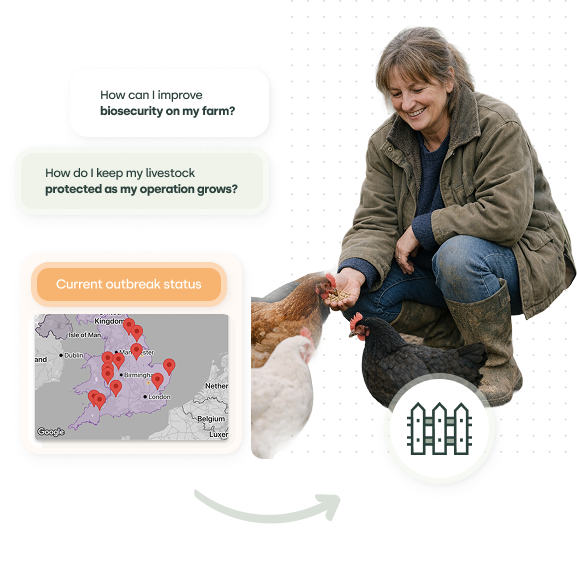
Recent avian influenza outbreaks demonstrate the scale of the challenge. During the 2025/26 outbreak season, 100 cases of highly pathogenic avian influenza (HPAI) H5N1 were confirmed in poultry and other captive birds across the UK, including 79 in England.

For UK poultry producers looking for additional expertise, poultry biosecurity services can provide an independent view of on-farm risk, identify opportunities for improvement and help strengthen disease prevention and preparedness.

But not all poultry biosecurity services provide the same level of support.

The right biosecurity partner should help you understand where risk exists, what needs attention first and how practical improvements can be embedded into everyday farm operations.

Group 166-1

What are poultry biosecurity services?

Poultry biosecurity services help poultry businesses identify, assess and reduce the risk of disease entering or spreading around their farms.

Depending on the needs of the business, support can include:

  • digital biosecurity risk assessments;
  • independent or external biosecurity reviews;
  • specialist on-farm consultancy;
  • assessment and prioritisation of disease risk;
  • practical recommendations for improvement;
  • disease preparedness and contingency planning;
  • staff training and behaviour change;
  • digital monitoring and visitor management tools; and
  • ongoing support to review progress and respond to changing threats.

The objective shouldn’t simply be to identify problems. Effective biosecurity support should give farm managers a clearer understanding of their risks and practical actions they can take to reduce them.

home-farmer

What should you look for in a poultry biosecurity provider?

Practical poultry experience

Poultry production presents specific biosecurity challenges, from managing movements between sheds and sites to controlling access, cleaning and disinfection, pest management, water hygiene and maintaining effective lines of separation.

When comparing poultry biosecurity services, ask about the provider’s experience of commercial poultry production and whether the people providing advice have practical experience working directly on farms.

Recommendations have to work within the realities of people, infrastructure, welfare and day-to-day production.

The technically perfect solution is of little value if it cannot be implemented effectively on your farm.

Disease experience as well as prevention

Good biosecurity is designed to prevent disease entering or spreading through a farm. But there is considerable value in working with people who also understand what happens when those controls fail.

Teams involved in disease outbreaks and emergency response see first-hand where vulnerabilities occur, how disease can spread and how seemingly small weaknesses can have significant consequences.

That experience can provide a different perspective on disease prevention.

When selecting a biosecurity partner, consider whether they understand both sides of the equation: how to reduce the likelihood of a disease incursion and how a poultry business needs to prepare should the worst happen.

A risk-based approach

An external biosecurity review should do more than produce a long list of potential improvements.

A useful review should help you understand:

  • where your greatest vulnerabilities lie;
  • which risks require more immediate attention;
  • which improvements could deliver the greatest benefit;
  • what can realistically be achieved in the short, medium and longer term; and
  • how progress can be measured.

Not every recommendation carries the same weight.

A risk-based approach helps farm managers distinguish between something that would be beneficial and something that represents a significant potential disease pathway requiring action.

Understanding of the UK poultry sector

Biosecurity does not operate in isolation from the wider requirements placed on UK poultry farms.

A provider should understand the regulatory environment, relevant industry assurance requirements and expectations around areas such as visitor management, farm access, hygiene and disease preparedness.

But compliance should be the baseline rather than the end goal.

Strong livestock biosecurity is ultimately about protecting birds and businesses every day, not simply demonstrating that a particular requirement has been met.

An understanding of people and behaviour

Buildings, barriers and equipment are only part of effective biosecurity.

People are responsible for following the procedures that protect a site: changing footwear, using hygiene barriers correctly, signing in, controlling visitors, cleaning equipment and recognising when something isn’t right.

Effective poultry biosecurity services should therefore consider behaviour as well as infrastructure.

When people understand both what they need to do and why it matters, it becomes easier to turn biosecurity from a set of rules into consistent everyday behaviour.

When should you consider an external biosecurity review?

An independent perspective can be valuable at any point, but there are circumstances where an external biosecurity review can be particularly useful.

check

When your farm or production system changes

New housing, changes to production systems or alterations to site layout can introduce new biosecurity risks. Reviewing plans early can help identify potential issues before they become embedded in everyday operations.

check

When disease risk changes

Periods of heightened disease risk are an obvious time to revisit existing arrangements. However, changing disease challenges – whether avian influenza, Salmonella or another threat – can also highlight the need to look again at how risk is being managed.

check

Following a disease event nearby

A confirmed outbreak in the local area often prompts farms to review their own arrangements. An independent assessment can help identify vulnerabilities that may previously have been overlooked.

check

Ahead of assurance activity

A review can highlight areas that may benefit from attention ahead of an assurance inspection, while keeping the focus on genuine risk reduction rather than simply preparing to pass an audit.

check

When you want to challenge familiar routines

One of the greatest benefits of an external review is simply having a fresh pair of eyes.

Processes can become familiar over time. An independent specialist can question why things are done in a particular way and observe how written procedures translate into actual behaviour on farm.

Look beyond a one-off assessment

An assessment provides a useful snapshot, but disease risk doesn’t stand still.

Seasonal threats change. Buildings and equipment change. Staff change. Production changes. New disease challenges emerge.

As part of your biosecurity partner selection, consider what happens after the initial assessment.

Can improvements be reassessed? Is there a way to monitor progress? Can the provider support training, contingency planning or further investigation when particular weaknesses are identified?

Effective biosecurity is better viewed as a process of continuous improvement and active risk management than as a periodic compliance exercise.

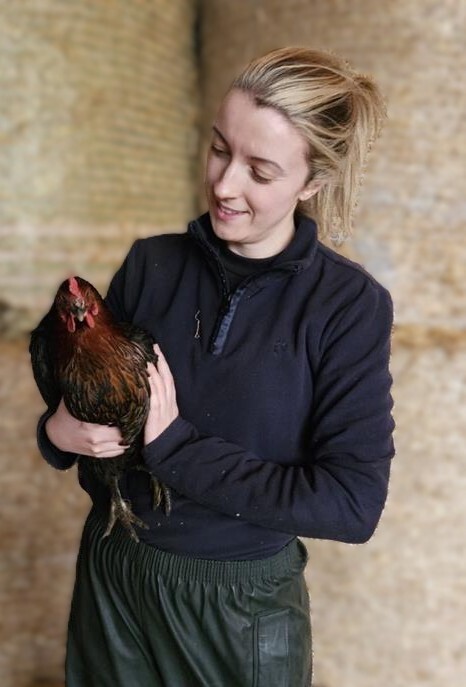
AmyDavies,BiosecurityAdvisor

Digital assessment or on-farm biosecurity review?

Not every poultry farm needs the same level of support.

For some businesses, the first step is gaining a clearer understanding of current biosecurity risk. For others, bringing an experienced specialist onto the farm provides additional insight and discussion to investigate particular challenges and develop a more detailed improvement plan.

whatiseBAS
small_producers

Start with a free digital biosecurity assessment

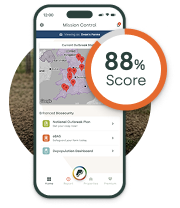
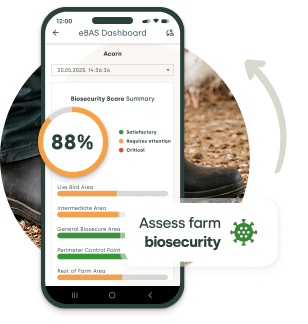
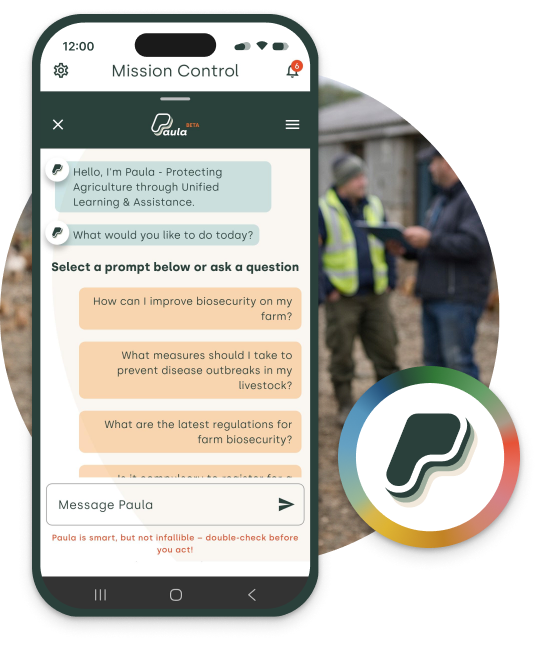
Livetec’s eBAS (electronic Biosecurity Assessment System) is free to access through the Livestock Protect mobile app, giving poultry producers a structured way to assess biosecurity across their farm.

The assessment can help you establish a baseline, identify potential areas of risk and start prioritising where improvements may be required.

It can also provide a useful starting point for conversations with your farm team, vet or biosecurity specialist.

For many farms, eBAS offers an accessible first step towards more proactive biosecurity management. Because the assessment can be repeated, it can also help you monitor how risk changes as improvements are made.

When face-to-face support adds value

There are situations where an on-farm biosecurity review can take that assessment further.

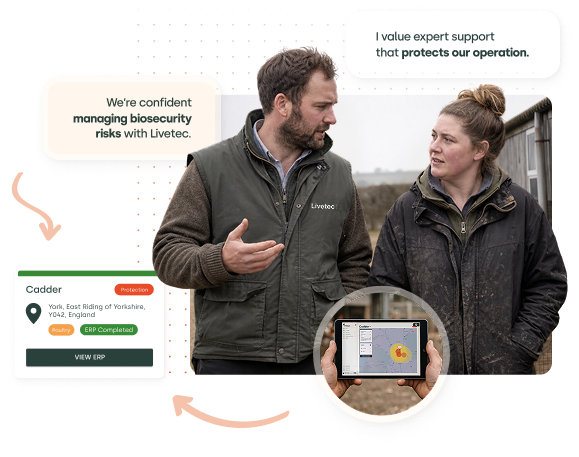
A face-to-face visit allows an experienced specialist to see how the farm operates in practice, talk to the people responsible for implementing procedures and explore the context behind potential risks.

It can reveal things that are difficult to capture through an assessment alone: how people actually move around a site, whether hygiene barriers work effectively in practice, where equipment crosses between areas or whether procedures are interpreted consistently by different members of the team.

Importantly, it also creates a conversation.

Rather than simply identifying a potential weakness, the farm team and specialist can explore why it exists and what a practical solution could look like for that particular business.

Digital and face-to-face poultry biosecurity services don’t have to be an either/or choice.

eBAS can provide the baseline. Specialist on-farm support can help shape the next steps.

Group 142
Largescale

Where does the Defra Poultry Biosecurity Review fit?

Eligible poultry producers in England can also access a government-funded Poultry Biosecurity Review (PBR) through the Animal Health and Welfare Pathway.

The vet-led review provides an opportunity to assess current biosecurity and identify recommendations for improvement.

This can sit alongside other forms of biosecurity support rather than replacing them.

Digital self-assessment can help producers understand and monitor their own risk. A funded vet review provides an independent veterinary perspective. Specialist poultry biosecurity support can then help businesses explore particular risks in greater depth, prioritise improvements and support implementation where required.

The important thing is to use assessment as a starting point for action and continuous improvement.

Frequently Asked Questions

How often should a poultry farm review its biosecurity?

Biosecurity should be reviewed regularly rather than only when an assurance visit is approaching or disease risk increases.

A review is particularly valuable following significant changes to buildings, production, staffing or farm procedures, or when the external disease-risk environment changes.

Regular assessment also allows farms to monitor improvements rather than treating biosecurity as a one-off exercise.

What is the difference between a biosecurity audit and a biosecurity review?

An audit will typically assess whether particular requirements, standards or procedures are being met.

A broader biosecurity review should also consider risk: where disease could enter or spread, how effective existing controls are in practice and which improvements should be prioritised.

Understanding why a weakness exists and how it can realistically be addressed can be just as important as identifying it.

Can I assess poultry biosecurity myself?

Yes. A structured digital assessment can help poultry producers review their own biosecurity and identify potential areas for improvement.

Livetec’s eBAS is free to access through the Livestock Protect mobile app and provides a structured assessment of current biosecurity risk.

Self-assessment can provide a useful baseline and help identify areas where further specialist support could add value.

How much does a poultry biosecurity review cost?

The cost depends on the type and level of support required.

Poultry producers can start with Livetec’s eBAS digital biosecurity assessment free of charge. More detailed face-to-face biosecurity services can then be scoped according to the farm, the complexity of the site or sites and the level of specialist support required.

Eligible producers in England may also be able to access a funded vet-led Poultry Biosecurity Review through the Animal Health and Welfare Pathway.

What happens during an on-farm biosecurity review?

The precise approach will depend on the farm and provider, but an on-farm review should consider how biosecurity works in practice.

This can include site access, movements of people and vehicles, hygiene barriers, cleaning and disinfection, pest control, water and feed risks, equipment movements, farm procedures, staff behaviours and disease preparedness.

The outcome should give you a clearer understanding of your priority risks and practical actions for addressing them.

Can a biosecurity review help with assurance requirements?

A biosecurity provider with experience of the UK poultry sector should understand relevant regulatory and assurance requirements and take these into consideration during a review.

However, effective biosecurity should go beyond preparing for an audit. The objective is to put practical controls in place that reduce disease risk every day.

Do I need both digital and face-to-face biosecurity support?

Not necessarily.

A digital assessment can provide a useful baseline and support regular monitoring. Face-to-face expertise can add value where risks require further investigation, an independent perspective is needed or a business wants help prioritising and implementing improvements.

The two approaches can also work together as part of an ongoing biosecurity programme.

Is the Defra Poultry Biosecurity Review the same as an independent biosecurity review?

No. The government-funded Poultry Biosecurity Review is a specific vet-led review available to eligible poultry keepers in England.

Independent poultry biosecurity services can provide different or additional support, including specialist consultancy, detailed risk investigation, training, contingency planning and ongoing implementation support.

The two can therefore complement one another.