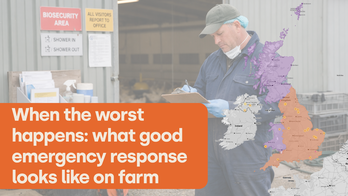
In a disease outbreak there’s only one way farmers need to act: quickly.
One of the many things we can learn from the recent deadly outbreak of avian influenza is how rapidly a disease can mutate and spread. This outbreak is the worst ever recorded with the most recent strain of this highly pathogenic disease ravaging premises across the country at lightning speed.
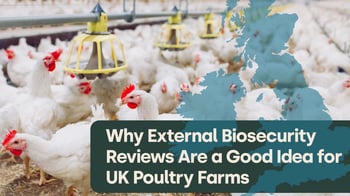
To fight back, it is imperative that farmers and keepers ensure the most up-to-date biosecurity measures are enacted on their premises. To protect the welfare of flocks, farms and finances, along with the mental welfare of owners and workers, there really is no other option.
Dramatic biosecurity improvements can be achieved rapidly through some simple changes. One of these is the transferring of a business’ biosecurity data from paper-based systems to a state-of-the-art digital record, allowing access to crucial data and information anywhere on- (or off-) farm, at any time of the night or day, along with all the added security benefits.
Poultry farming involves a lot of record-keeping, such as tracking feed and water consumption, health records, and production metrics. Secure data management systems can streamline this process, making it easier for farmers to maintain and access these records enabling them to analyse the efficiency of their animals and business at levels never achievable under a paper-based record system.
In addition, digitising visitor logbooks allows for effective traceability of livestock, people and vehicles. For farms that find themselves struck by a case of avian influenza, this level of traceability is crucial in the investigation of contamination source or site of disease outbreak. The faster this information can be provided to authorities, the faster they can act and the faster farmers can be up and running again. Digital record keeping is invaluable to speeding up this process.
With effective digital storage, farmers are able to analyse farm data in almost infinite ways, allowing them to spot trends that might offer efficiency savings, business improvements or, crucially, identify areas of risk for potential disease incursion, allowing them to act proactively and decisively, getting a step ahead of disease. This is especially valuable for owners running multiple farms across wide areas: the larger the data sets, the more powerful the data. But even the largest datasets can be accessed anywhere at the press of a button, the click of a mouse or the touch of a screen.
Digital record keeping – whether it be for farm performance or for biosecurity – is not something for farmers to avoid, but to embrace. Technology can help prepare farms and businesses for a potential outbreak, and save them precious hours in the event of one occurring.