In the final part of our blog series rooted in Amy Davies’ masterclass from Livetec’s From Fatigue to Fortitude – Tackling Biosecurity Challenges webinar, we explore how digital innovation is transforming biosecurity on farms. With tools that offer real-time assessments and actionable insights, technology is helping farmers shift from reactive responses to proactive, data-led protection.
Livetec’s traditional face-to-face advisory service remains an essential offering. But two years ago, we asked: How can we scale our impact without compromising quality?
The answer: digital transformation.
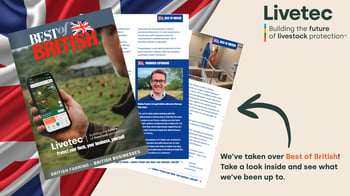
A Biosecurity Advisor in Your Pocket
Our new digital platform allows farmers to:
– Conduct structured bioseucirty assessments via an easy-to-use app
– Answer questions that evaluate both physical structures and human behaviour
– Receive instant recommendations for improvement for areas that are your most vulnerable
Unlike static checklists, the tool adapts to real farm conditions, mapping vulnerabilities across different farm zones.
What your biosecurity score really means
Assessments generate a biosecurity score, for example, 54%. But Amy reminded us: that means you’re 46% vulnerable to disease.
The goal isn’t perfection. It’s clarity. Knowing where your weak points are gives you the power to act:
– Is the risk at the gate?
– Are staff following protocols?
– Are procedures aligned with infrastructure?
Real farms, real progress
Some farms Amy works with become surrounded by avian influenza hit neighbours during heightened outbreaks, yet remain disease-free. Their secret?
– Strong mindset
– Simple, well-maintained procedures
– Relentless consistency
They show that biosecurity doesn’t have to be expensive, just effective.
The true cost of Failure
Getting hit with a notifiable disease like avian influenza brings enormous costs financial, emotional, and operational. Insurance might help, but mental health takes a toll too.
Some farmers hit twice by outbreaks are now considering leaving poultry altogether. Others are investing in robust biosecurity and thriving.
Final Thoughts
Amy’s advice: Keep it simple and embed it into everything.
Would we still need to cull if everyone followed biosecurity best practices every day? Her answer is clear: No.
Biosecurity isn’t just a strategy. It’s our shared responsibility and with the right mindset, behaviours, and tools, we can turn vulnerability into resilience.