With prolonged periods of hot, dry weather and harvest already well underway across many parts of the UK, poultry producers are once again experiencing the seasonal rise in salmonella outbreaks.
While there is no single explanation for why cases increase during the summer months, the combination of environmental conditions and increased on-farm activity can create conducive conditions for salmonella to reproduce and spread. Salmonella grows best at higher temperatures, and dry weather often generates more airborne dust to move the bacteria about. Harvest also disturbs vermin, building environmental control systems work harder, and peoples working conditions can generally be uncomfortable. All these factors can significantly increase disease risk.
According to Dr Paul Talling, Biosecurity Advisor, producers shouldn't focus on finding one single cause but instead be aware of the range of seasonal pressures and manage those risks that they can control.
There are three key areas poultry producers should keep firmly on their radar.
Vermin on the move
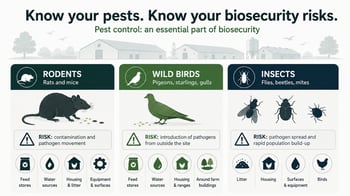
As fields are cleared, rodents lose both food sources and shelter, forcing them to move towards farm buildings where they can find both. Vermin are a known vector with respect to disease incursion. and this migration can increase the opportunity for salmonella to be introduced onto poultry units. Additionally manure spreading is commonly done after a field is harvested and this can significantly increase the bacterial load of land surrounding a poultry unit increasing the risk of cross contamination. With greater activity around the farm, maintaining an effective vermin control programme is very important.
Amy Davies, Biosecurity Advisor, says this is a risk many producers’ underestimate.
"Harvest disturbs vermin. They don't want to stay where machinery is working and there is no cover, so they move towards buildings where they will try to find shelter. Also avoid, spreading muck near your buildings as this will just increase the risk from vermin”. Dr Talling adds that summer vermin pressure is often dependant on the amount of feed available elsewhere, but this can change very quickly as above and vermin can move in very quickly, often catching producers out.
"I think people ignore vermin control over the summer because traditionally it’s not normally a problem, However, harvest is much earlier this year so food sources in the environments are likely to dry up much sooner and vermin will be moving back towards buildings soon."
Dust, dry weather and an earlier harvest
This year's exceptionally dry conditions has not only brought harvest forward but has helped generated a lot of dust. Dust is more than just an operational nuisance. It can be contaminated with bacteria which may then be drawn into poultry buildings through ventilation systems. Dust from feed deliveries can also get contaminated if not collected and can be further blown around, increasing the opportunity for airborne contamination.
Dr Talling explains that while producers cannot control the weather, they can be aware of how it affects disease risk.
"Hot, dry weather means the fans are working harder, pulling more air into the building. If that air is carrying contaminated dust, it increases the risk. Minimising dust near vent inlets is important. "
That might include being mindful of harvesting activity near poultry houses, adjusting ventilation if large amounts of dust are being generated nearby or even dampening down areas to suppress dust.
Never underestimate the human factor
Environmental conditions may set the scene, but people remain one of the most probable ways Salmonella can enter a poultry unit.
Whether its contaminated dust carried on boots or clothing, visitors moving between sites or poor hygiene during routine sampling, human error can have significant consequences. The implications of a positive salmonella result are severe, making robust biosecurity procedures essential at every stage.
Dr Talling says salmonella sampling is one area where producers should remain especially vigilant.
"The consequences of a positive salmonella result are significant, so it's vital that anyone taking samples follows all procedures properly. Something as simple as poor hand hygiene or inadvertently touching dirty surfaces can contaminate a sample before it even reaches the birds"
Amy Davies also highlights the importance of not overlooking the less visible risks inside the shed during periods of hot weather.
"When temperatures rise, biofilm can build up more readily in water lines, creating an environment where bacteria can multiply rapidly. At the same time, birds experiencing thermal stress are more susceptible to disease. Regularly flushing water systems, alongside protecting feed from contamination will help reduce the overall risk.
Every action can reduce the overall risk
While producers cannot prevent dry weather, neighbouring harvest operations or every source of dust, maintaining strong everyday biosecurity remains the most effective defence against salmonella.
From controlling vermin and managing dust to following good hygiene practices, maintaining water systems and taking extra care when sampling, every measure helps reduce the chance of disease entering the flock.
As Dr Paul Talling concludes:
"There are lots of contributing factors. You won't be able to control every one of them, but every risk you mitigate helps lower the overall chance of salmonella finding its way onto your farm and infecting your birds."
In practice, it's about recognising where the greatest threats lie and taking practical steps to reduce them. An independent biosecurity risk assessment can help identify vulnerabilities you may not have already considered and provide tailored recommendations to strengthen your farm's defences.
If you'd like practical advice on reducing salmonella risk or improving biosecurity on your poultry unit, speak to our Biosecurity Advisors. Whether you need support reviewing your current protocols, strengthening site and building access procedures, improving sampling procedures or identifying seasonal risks, our team is here to help.
Get in touch today to discover how proactive biosecurity can help protect your flock, your productivity and your peace of mind.
-1.png?width=350&name=Farmgate_Episode1%20(18)-1.png)